
Bed Bug Inspection, K9 Detection, and Extermination
Bed Bug Service
Pest Control Professionals
Contact Us Today!
Free Quote
Bed bugs are small, blood-feeding insects that often remain hidden in mattresses, furniture, wall openings, and other areas near where people sleep or rest.
They can spread between homes, apartments, hotels, healthcare facilities, and commercial properties by hitchhiking on luggage, clothing, furniture, and personal belongings. Common warning signs include dark spotting on bedding, shed skins, small eggs, live insects, blood stains, and unexplained itchy bites.
Because bed bugs reproduce quickly and can hide in extremely small spaces, early identification is essential for limiting the infestation and reducing treatment costs. Atlas K9 uses specially trained bed bug detection dogs to help locate areas of suspected activity quickly and discreetly. Once activity is confirmed, our team develops a targeted treatment and monitoring plan based on the property and severity of the infestation.
Professional inspection and extermination are generally more reliable than do-it-yourself methods, which may miss hidden insects or cause bed bugs to spread into new areas.
What Are Bed Bug Infestations?
Bed bugs are parasitic insects that feed primarily on human blood. They are usually most active at night, although they may feed during the day when a person regularly sleeps or rests during daytime hours.
Bed bugs are frequently found in homes, hotels, apartments, shelters, healthcare facilities, dormitories, offices, transportation vehicles, and other locations where people and personal belongings move frequently.
They commonly hide in mattresses, box springs, bed frames, headboards, couches, recliners, baseboards, wall openings, and personal mobility equipment. Their flat bodies allow them to remain concealed in extremely narrow cracks and crevices.
Because bed bugs are difficult to locate through visual inspection alone, Atlas K9 combines trained canine detection with professional inspection, treatment planning, extermination, and follow-up monitoring.
What Do Bed Bugs Look Like?
Adult bed bugs are generally about the size and shape of an apple seed. They have flat, oval bodies and are typically brown or reddish-brown, particularly after feeding.
Bed bugs do not have functional wings and cannot fly. They also do not jump. Instead, they crawl between hiding places and feeding areas.
Their flattened bodies allow them to fit into mattress seams, furniture joints, behind baseboards, inside wall openings, around electrical outlets, and beneath carpeting. Young bed bugs, known as nymphs, are smaller and may appear pale or nearly translucent before feeding.
Bed bug eggs are extremely small, light-colored, and difficult to see without a detailed inspection.

The Bed Bug Life Cycle
Bed bugs develop through three primary stages: egg, nymph, and adult.
Eggs
Female bed bugs deposit small, pale eggs in protected cracks, fabric seams, furniture joints, and other hidden areas. Because the eggs are tiny and often attached to surfaces, they can easily be missed during a basic visual inspection.
Nymphs
After hatching, young bed bugs progress through five nymph stages. They generally require a blood meal before advancing to the next stage. Nymphs resemble adult bed bugs but are smaller and lighter in color. Their size can make them especially difficult to identify in the early stages of an infestation.
Adults
Adult bed bugs can survive for extended periods when conditions are favorable. Their ability to remain hidden, reproduce, and survive between feedings makes complete elimination challenging without a structured treatment and follow-up process. Treatment must address visible adult bed bugs as well as hidden nymphs and newly hatched insects.
How Bed Bugs Find and Feed on Hosts
Bed bugs are attracted to body heat, carbon dioxide, and other chemical signals produced by people and animals.
They typically emerge from hiding places to feed while a person is sleeping or remaining still for an extended period. After feeding, they return to protected areas near the bed, couch, chair, or resting location.
Although bed bugs prefer human hosts, they may also feed on animals when people are unavailable.
Bed bug activity is not always limited to bedrooms. In offices, healthcare environments, theaters, waiting rooms, and other commercial properties, they may be found near upholstered furniture or areas where people regularly sit.
Where Do Bed Bugs Hide?
Bed bugs prefer small, dark, protected spaces close to a reliable host.
Common hiding locations include:
- Mattress seams, labels, tufts, and folds
- Box springs and bed foundations
- Bed frames and headboards
- Couches, recliners, and upholstered furniture
- Nightstands and nearby furniture
- Baseboards and carpeting edges
- Cracks in walls, floors, and trim
- Electrical outlets and wall openings
- Behind loose wallpaper or wall decorations
- Luggage, backpacks, clothing, and personal belongings
- Wheelchairs and personal mobility equipment
- Furniture joints and screw openings
As an infestation grows, bed bugs may spread farther away from the original sleeping or resting area.
What Causes a Bed Bug Infestation?
Bed bugs are usually introduced into a property through travel, shared furniture, clothing, luggage, deliveries, or movement between connected living spaces.
They are effective hitchhikers and can be transported without being noticed. Hotels, apartment buildings, dormitories, shelters, healthcare facilities, public transportation, and other high-traffic environments may face an increased risk because people and belongings move through them frequently.
In multi-unit properties, bed bugs may also travel between rooms or units through wall openings, utility lines, hallways, and shared spaces.
A bed bug infestation is not necessarily related to poor housekeeping. Even clean and well-maintained properties can experience bed bug activity.
Common Signs of Bed Bugs
Possible signs of bed bug activity include:
- Live adult bed bugs or nymphs
- Dark spots or smears on mattresses, walls, furniture, or bedding
- Small blood stains on sheets or clothing
- Shed skins or exoskeletons
- Tiny eggs or eggshells in cracks and seams
- Unexplained bites, welts, or skin irritation
- A musty odor in areas with significant activity
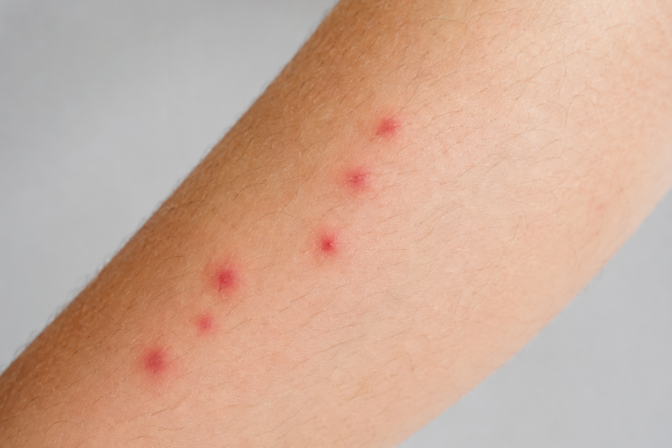
Bites alone cannot confirm that bed bugs are present. Reactions vary from person to person, and bed bug bites may resemble mosquito bites, flea bites, allergic reactions, or other skin conditions.
A professional inspection is the most reliable way to determine whether bed bug activity is present.
Bed Bug Bites and Symptoms
Bed bug bites may appear as small red bumps, clusters, or lines. They can cause itching, irritation, swelling, or discomfort.
Some people react immediately, while others may not notice symptoms for several days. Certain individuals may have little or no visible reaction.
Bed bugs are not generally known for transmitting disease, but an infestation can cause sleep disruption, anxiety, skin irritation, and significant stress.
Because bite patterns are not conclusive, Atlas K9 looks for direct evidence of bed bug activity rather than relying on skin reactions alone.